Bringing Security
to Daily Life:
The Founding Ambition
Entrusted to
Lightweight Shutters
Chapter 01
Identifying social change and seizing a new opportunity
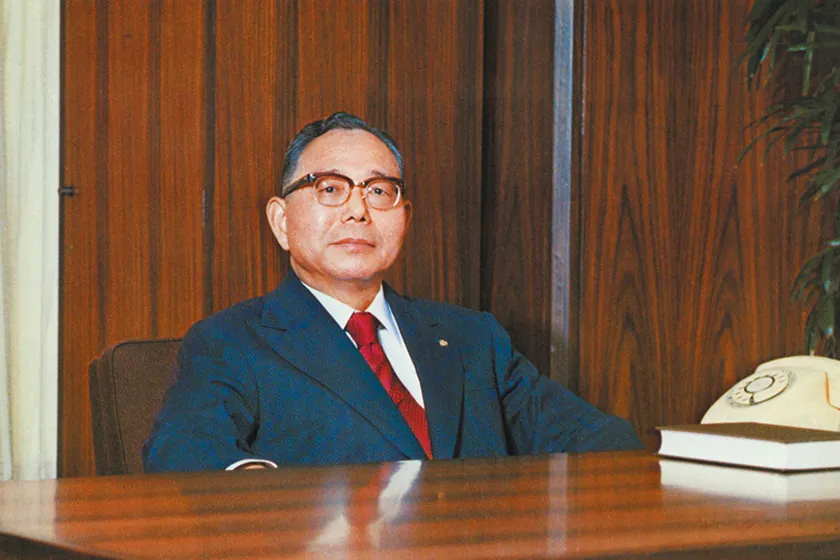
In 1956, the Japanese economy was growing by leaps and bounds. People called it the Jimmu Economy—the greatest boom since the nation’s founding—and it was famously declared that the post-war era was already over. It was during this year that Manji Takayama founded Sanwa Shutter Manufacturing Co., Ltd. (Sanwa) near Sanwa Market, which was in the Sanwa Odori Shopping Arcade in Amagasaki City, Hyogo Prefecture.
At the time, shutters were usually the folding type, and were generally heavy-duty shutters installed in banks, department stores, and other large buildings. In contrast, lightweight shutters were made of linked corrugated tinplate panels. Easy to open and close and practical as a replacement for wooden shop doors, they were beginning to spread to ordinary shops and homes, growing in popularity.
As commercial activity gained momentum amid the booming economy, cash transactions increased, heightening awareness of crime prevention. Shutters provided a visible security measure, so demand for them grew rapidly.
From a manufacturing standpoint, lightweight shutters could be produced with relatively simple equipment. Ironworks and hardware shops in the Osaka–Kobe area at the time entered the market one after another, creating a major industry movement.
Manji Takayama did not keep up with the trend itself. Yet he saw that shutters, with their convenience and security benefits, could become an indispensable part of daily life. Convinced of their potential, he decided to step into the fast-growing industry.
Although Sanwa was a late entrant, demand for lightweight shutters remained high in areas lined with many small stores. From the outset, the company was kept busy taking orders and installing shutters. Later, Manji Takayama would emphasize the importance of good timing, geographical advantage, and harmonious social conditions in business. In hindsight, the company’s founding was indeed blessed with the right era, the right place, and human connections.
However, the road forward was anything but smooth. But in spite of the difficulties, Takayama secured funding, invested in equipment, and built a factory. Sanwa began shipping products beyond the Kansai region. Shutters installed at the Marudai Department Store in Nagaoka City, Niigata Prefecture became the company’s first shipment to a distant region.
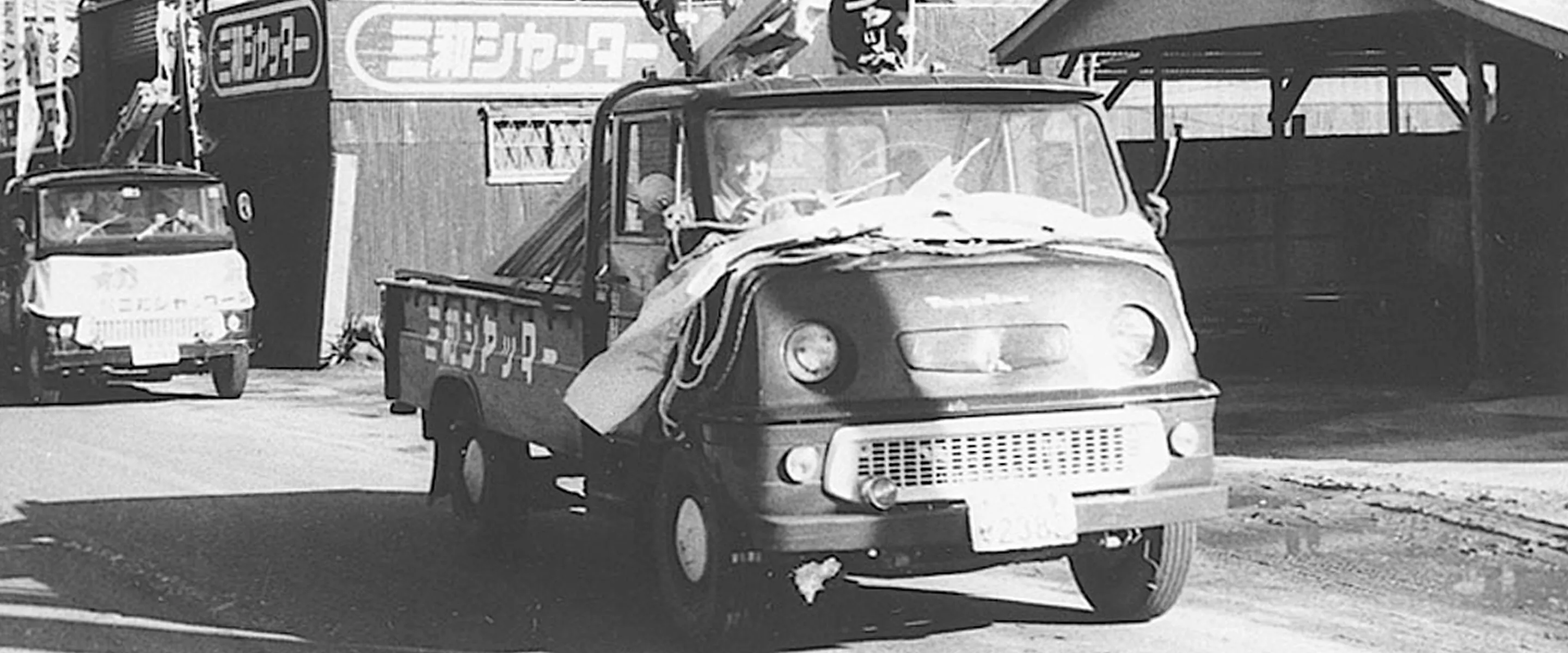
As a result of that deal, word of mouth spread, and orders began to stream in from Tokyo. After an order was received by phone, the shutters would be loaded onto an express freight train from Umeda the following evening, received in Shiodome the following morning, and delivered directly to the store. This ability to complete installation within three days of receiving an order drew significant attention.
To ensure the company would not lose momentum, Manji Takayama led the company himself. Employees worked tirelessly, and the factory operated at full capacity. Through these steady efforts, Sanwa evolved from a single factory in Amagasaki into a company that delivered safety and convenience across the whole of Japan.

Chapter 02
Developing pre-painted shutters: The latecomer creates reasons to be chosen
Thanks to its success in Tokyo, Sanwa gradually came to be known nationwide. The company’s network of distributors and agents spread into Chubu, Kyushu, and Hokkaido, and a directly managed office was opened in Nagoya, where there had been no agent. Orders surged accordingly, making expanding production an urgent issue.
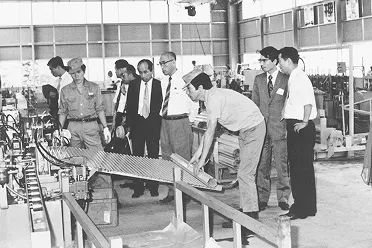
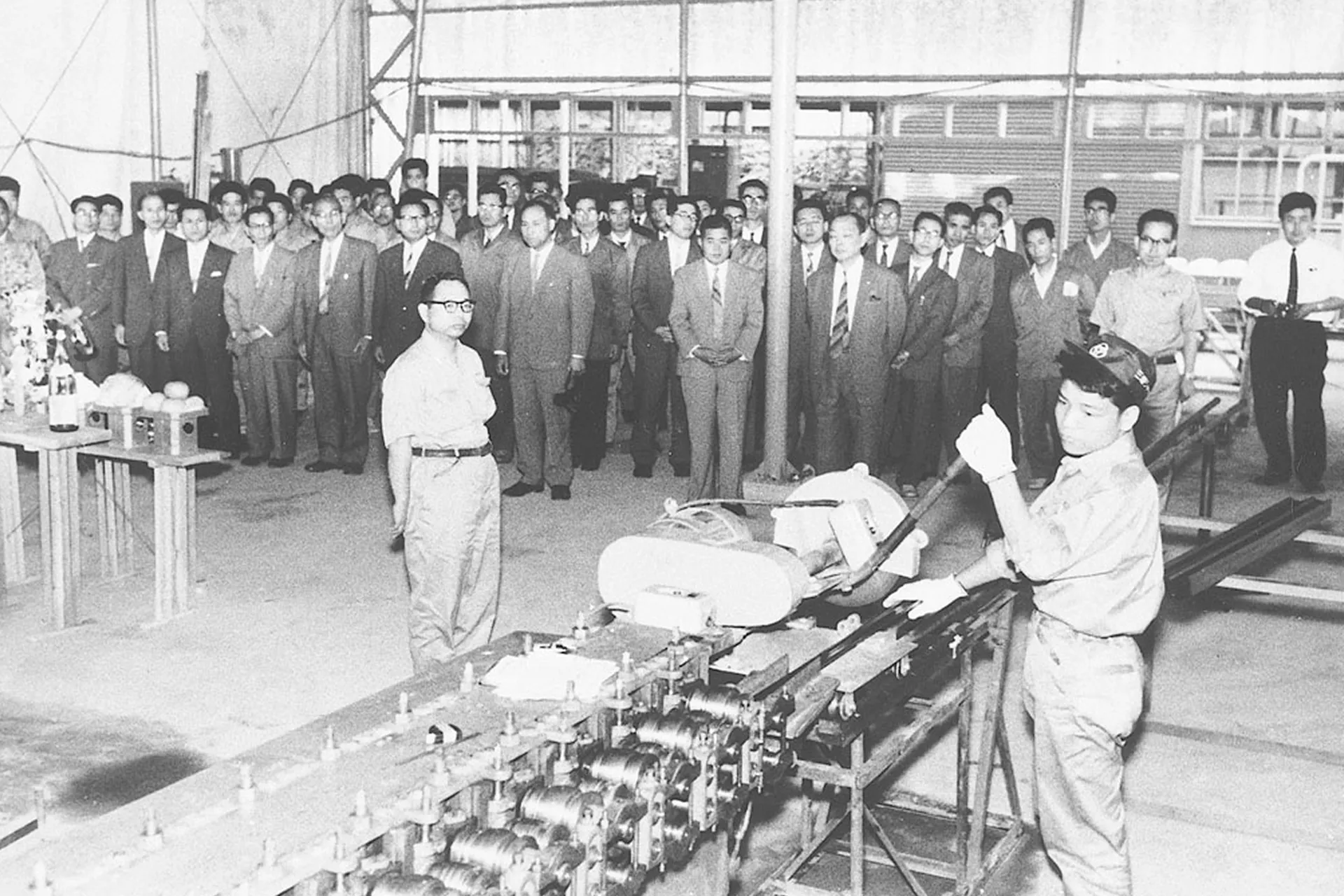
In response, Sanwa implemented a technological innovation in 1958. To eliminate the need for applying a top coat of paint after installation, the company developed a conveyer system that enabled coatings to be baked on during the manufacturing process. Customers welcomed the ability to choose a color at the quotation stage, and the “shutters that didn’t need painting” were a big hit. The process that cut slats for shutter curtains was also improved, enabling shutters to be tailored to specific requirements depending on the dimension. Production volume surged.
By advancing mechanization in shutter manufacturing, which was traditionally considered a craftsman’s trade, Sanwa was able to establish a system of mass production. Besides increasing output, the company achieved stable quality, reduced costs, and became able to offer competitive prices. Despite being a late entrant to the industry, Sanwa was stepping ahead as a pioneer.
Chapter 03
Improving technology for greater security in daily life
Having overcome the turbulence of its founding years and achieved rapid growth, Sanwa marked its fifth anniversary in 1961. A commemorative ceremony was held at Amagasaki Civic Center, where Sanwa established its company policy in a statement titled “For Better Development” that rearticulated the company’s founding spirit.
1. The Company shall engage in business in pursuit of profit, on the premise that such business is socially meaningful.
2. The Company shall strive to the utmost degree to raise its technological level, and accomplish this swiftly.
3. The Company shall give heed to the stability of its employees’ livelihoods, and do its best to increase salaries.
4. The Company shall aim to operate democratically as a fellowship of individuals who work earnestly.
What Takayama emphasized here was not just technological advancement, employee livelihoods, or organizational principles. First and foremost, he positioned “socially meaningful business” as the premise of corporate activity. What Sanwa spread across Japan was not only products in the form of shutters. The company’s true legacy was building a business foundation and providing safe, comfortable living via shutters amid a period of intense economic growth.