From Sales, Design
and Manufacturing
to Installation and
Maintenance:
A System that Stays
Responsible to the End
Chapter 01
Increasing product value is the shortest path to trust
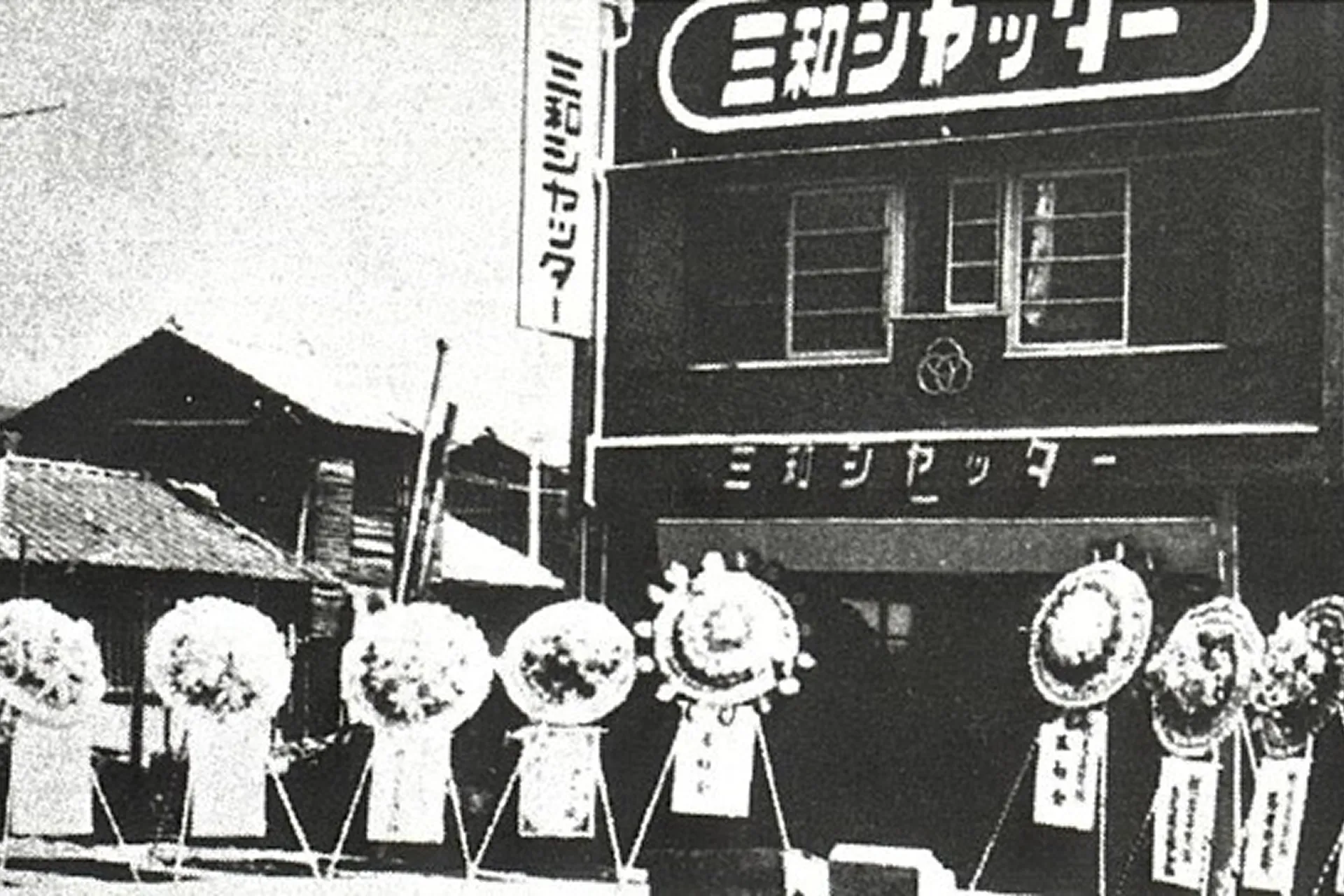
In the latter half of the 1950s when Sanwa was founded, Japan entered a period of rapid economic growth. During this time, small and medium-sized neighborhood factories began expanding in scale and moving toward specialization. Workplaces that had been centered on family-run operations or craftsmanship were gradually reorganized into corporate structures, and the shape of industry itself began to change.
In an era of growing demand, companies competed fiercely to broaden their sales channels and increase sales volume.
Sanwa doubled down on carefully installing consistent, high-quality products. “If we don’t increase the value of the products themselves, we won’t reach the end customer.” With this conviction, Sanwa focused its efforts on building a foundation for reliably delivering quality.
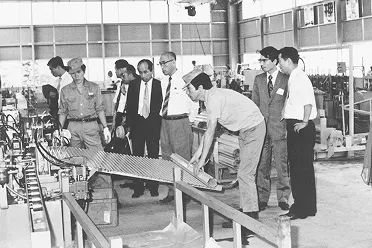
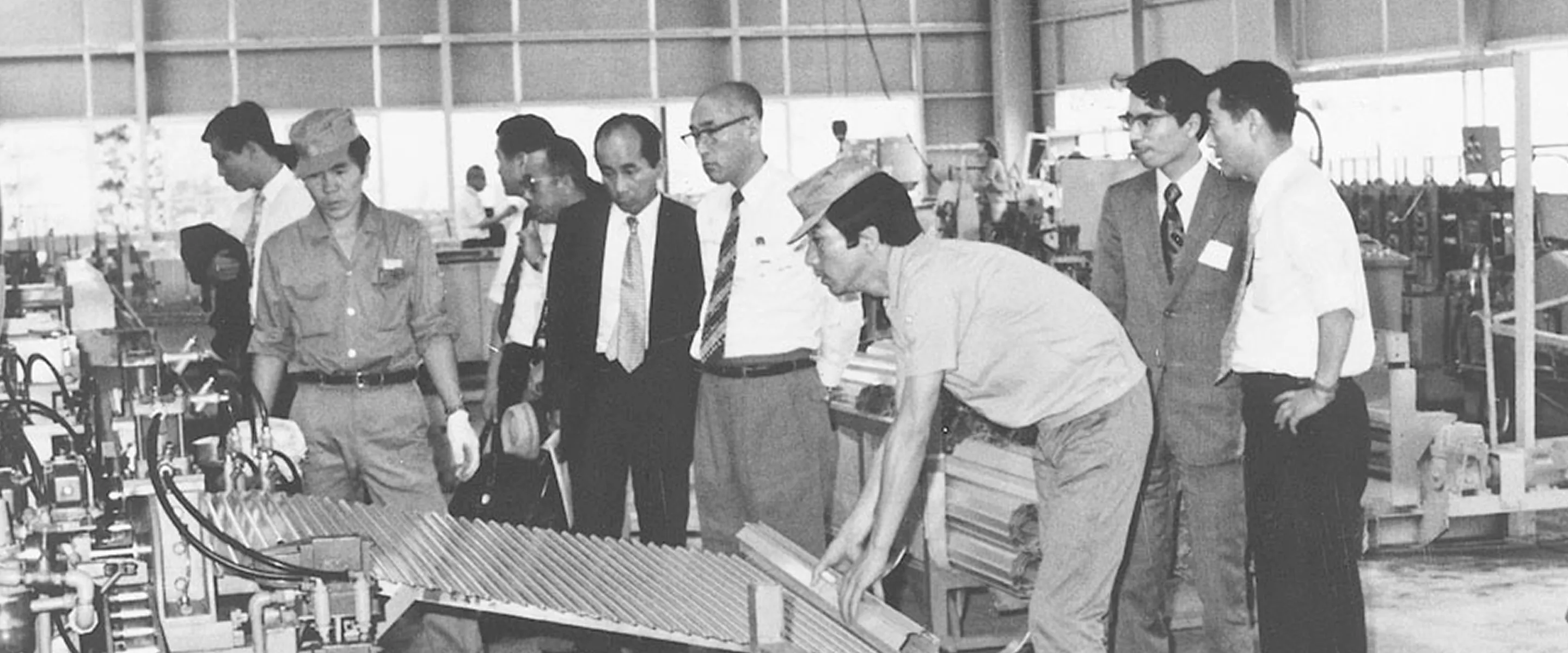
Rather than stopping at technological innovation aimed at efficiency improvements and mass production, the company instituted a direct sales system with branch offices across the country to eliminate variation in installation quality. Every effort was made to improve customer satisfaction. The decision Sanwa made in that era was to increase product quality and stay responsible for that quality through to the end.
Chapter 02
Proximity to factories provides flexibility
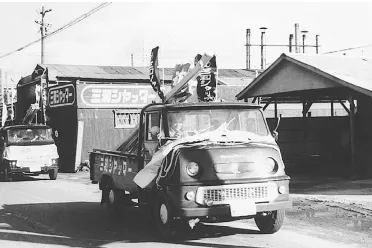
While building a system of direct sales, Sanwa also worked to expand its factory network nationwide. The Sapporo Plant and Tokyo Plant were established in 1961, and the Kyushu Plant was established in 1962. A system of regional business divisions was instituted in 1965 to further strengthen the integration of manufacturing and sales. By tightly linking branch offices across the country with local factories, Sanwa sought to provide products with greater speed and flexibility.
Under the banner of “Integrated manufacturing and sales with responsible installation,” Sanwa organized business divisions in the regions of Hokkaido, Tohoku, Kanto, Chubu, Kansai, and Kyushu. This proved to the best system for instilling the attitude of taking responsibility to the very end for what one produces, thus ensuring consistent quality from ordering to installation. Concurrently, coordination tightened between sales, design, manufacturing, installation, and maintenance teams. This coordination became another of Sanwa’s significant strengths.
As the regional business divisions were all financially independent, each was able to offer speedy, flexible service grounded in high situational awareness. Local teams—who understood their customers’ needs best—were able to swiftly identify new needs, reflect those in designs, deploy the designs to the factory, and deliver the product to the customer. The regional business division system drove strong sales performances. While the sector reeled under a succession of bankruptcies, Sanwa rose to claim the top market share for lightweight shutters and second place for heavy-duty shutters in 1965.
Chapter 03
Untiring pursuit of customer satisfaction
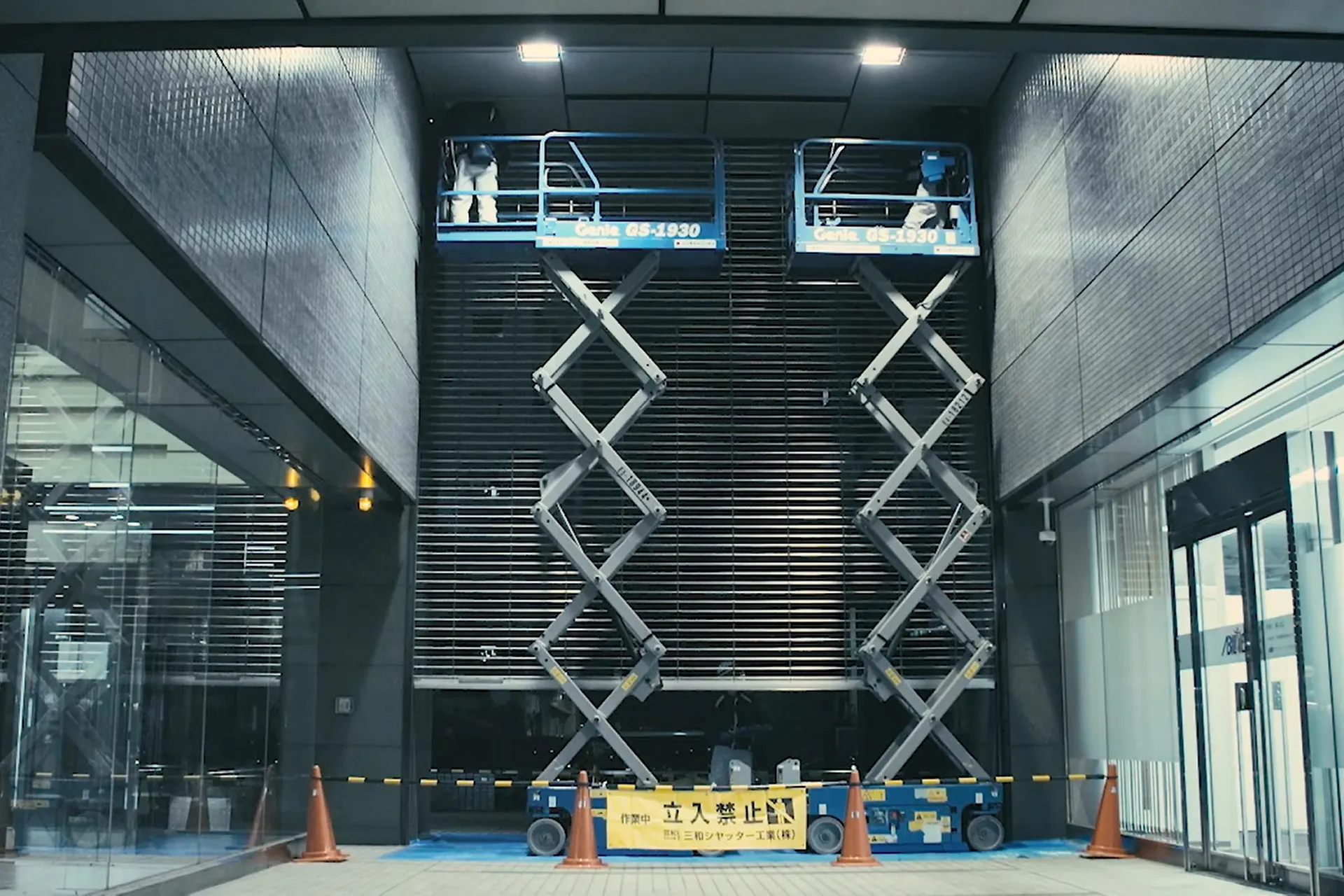
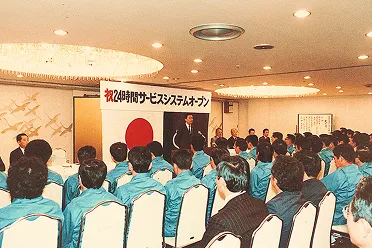
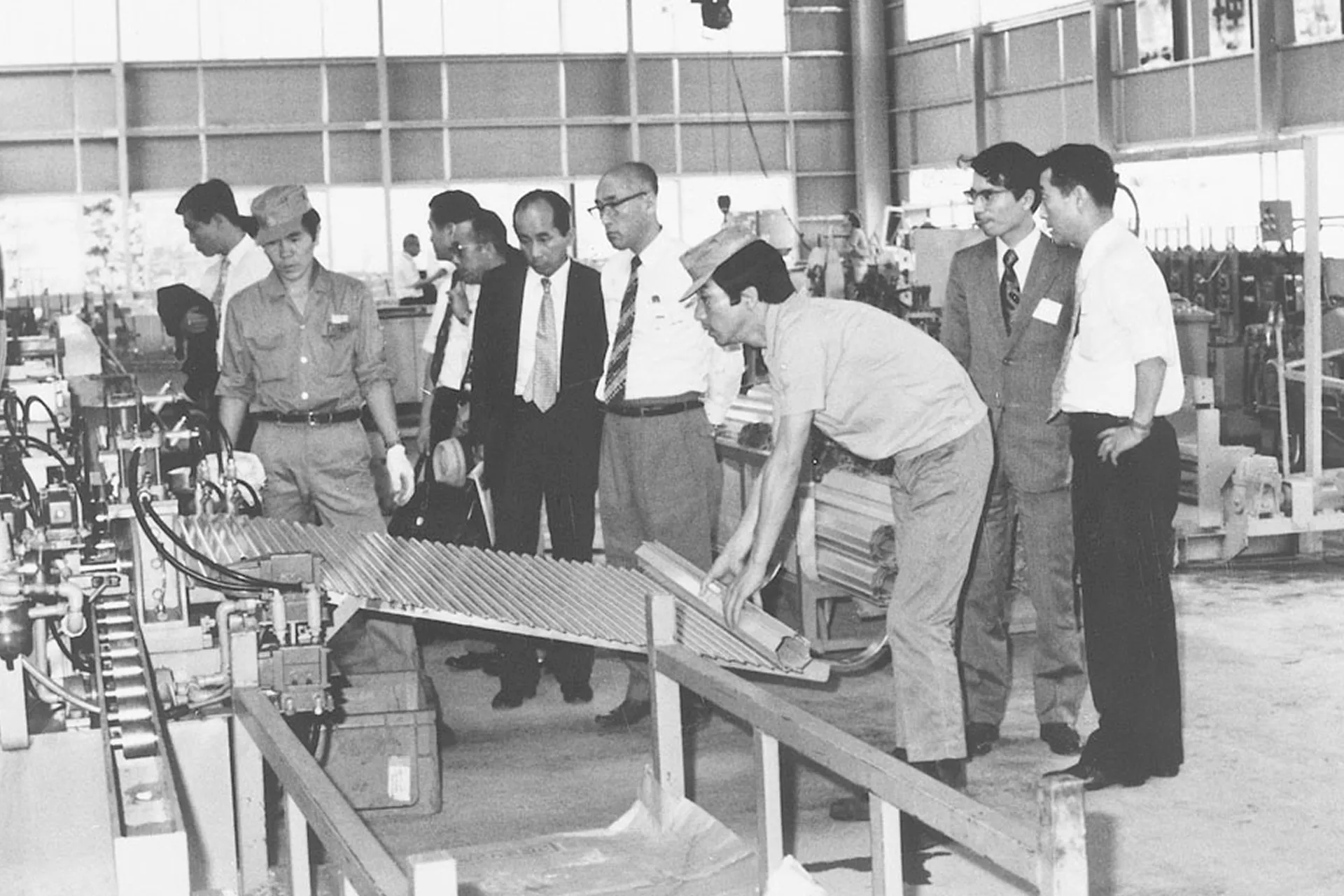
This integrated responsibility system remains one of Sanwa’s greatest strengths. Designs anticipate installation methods and inspection, custom solutions can be tailored to individual sites, and company plants offer flexible production. Installation is conducted by company technicians, and reception is open to repair requests around the clock. The company’s stance of staying responsible through delivery and after-sales maintenance remains unchanged.
Shutters are products for which safety and reliability are paramount. If installation defects, malfunctions, or accidents occur and it is unclear where responsibility lies, customer trust can easily be lost. To prevent such situations from arising and ensure that customers can keep using Sanwa products with confidence, we will always uphold the integrated responsibility system that we have cultivated throughout our history.